

Date: October 2026 Mercaptans (thiols,) are organosulfur chemicals with -SH functional group. Major grades include methyl mercaptan, ethyl mercaptan, isopropyl mercaptan, tert-dodecyl mercaptan (TDM), 2-mercaptoethanol, widely used for feed methionine, natural gas/LPG odorant, polymer chain transfer agent, pharma & agrochemical intermediates.
1. Global Market Size & Forecast
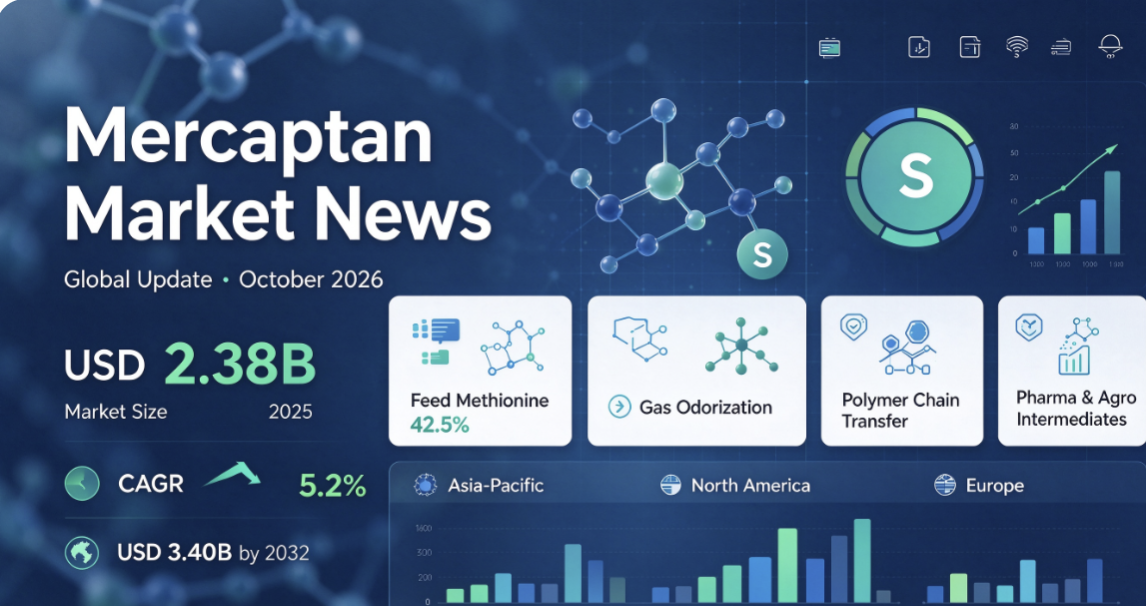
The global mercaptan market reached USD 2.38 billion in 2025, projected to grow at 5.2% CAGR to USD 3.40 billion by 2032.
- · Methyl mercaptan dominates product share (46% in 2025), mainly for methionine raw material;
- · By end-use: animal feed (methionine production) accounts for 42.5% of total consumption, followed by oil & gas gas odorization, polymer industry, pharmaceutical and agrochemical intermediates.
- · Regional split: Asia-Pacific > North America > Europe. APAC is the fastest-growing region, now contributing ~30% of global supply, driven by new methionine and polymer capacity in China & Southeast Asia.
2. Core Demand Drivers
1. Animal nutrition (biggest demand) Rising global meat consumption pushes methionine output expansion. Methyl mercaptan is the key feedstock for methionine. Feed additive manufacturers sign long-term offtake contracts, locking supply of methanol and hydrogen sulfide (H₂S feedstock). New capacity in China, US and Brazil will add around 120 kt/year methyl mercaptan to meet livestock demand growth.
2. Natural gas & LPG odorization Ethyl mercaptan, tert-butyl mercaptan and isopropyl mercaptan serve as mandatory odorants for gas leak detection. China, India and Indonesia tightened gas odorization regulatory standards, requiring high-purity certified mercaptans. Expanding gas pipeline & LPG distribution network in emerging Asia fuels steady demand growth for thiol odorants.
3. Polymer & synthetic rubber industry Tert-dodecyl mercaptan (TDM) and n-dodecyl mercaptan act as chain transfer agents for ABS, SBR latex, acrylic emulsion and synthetic rubber, controlling polymer molecular weight. Automotive tire and coating industry demand supports stable consumption of long-chain mercaptans.
4. Specialty high-purity grades High-purity thiols (>99.5%) for pharmaceutical synthesis and electronic materials are new high-margin segments launched since 2023, with small-volume but premium pricing.
3. Supply & Capacity Update
- · 2023–2024: Multiple Asian producers launched methyl mercaptan & methionine integrated projects, lifting regional mercaptan capacity by 10–12%. Single project scale can exceed 20,000 tons/year.
- · Production technology: H₂S-methanol vapor-phase catalytic synthesis covers over 95% of global methyl mercaptan output. Plant digital twin & real-time monitoring improve yield and cut energy cost, accelerating industry consolidation; small inefficient producers exit the market.
- · Major players: Arkema, BASF, Chevron Phillips, Eastman, Toray Fine Chemicals, Clariant, plus large Chinese integrated thiochemical manufacturers. Arkema expanded thiochemical capacity to cater oil & gas and agrochemical demand in recent years.
4. Recent Industry Innovations & Regulatory Trend
1. Low-odor mercaptan grades Since 2023, three top chemical firms rolled out low-odor mercaptan products, cutting odor intensity by 50–70% vs standard grades, targeting gas odorization and polymer modification in EU and North America, to reduce occupational exposure complaints.
2. Emission & safety tightening EU REACH, US EPA AEGL rules impose stricter sulfur emission and workplace exposure limits. More than five mercaptan plants in North America and Europe completed flue gas & containment retrofits in 2024, reducing sulfur emissions by 20–40%. Production, storage, transport and dosing all require enhanced leak containment and safety documentation; supply chain resilience becomes critical given limited qualified manufacturers.
3. Digital dosing system for gas odorant Over 10 global gas utilities deployed automatic digital mercaptan injection & monitoring systems, lowering dosing fluctuation by over 30% and improving gas safety compliance.
5. Market Challenges & Price Risks
- · Raw material volatility: Hydrogen sulfide (H₂S) and methanol are core feedstocks; H₂S price swings directly squeeze mercaptan production margins.
- · Safety barrier: Mercaptans are flammable, malodorous and toxic; CAPEX for emission control and safety systems is high, raising entry threshold.
- · Environmental pressure: Stringent sulfur discharge regulations increase operating cost continuously.
6. Outlook
The mercaptan market will maintain steady growth over 2026–2032. APAC will remain the growth engine. Demand growth will come mainly from feed methionine and natural gas odorization. High-purity specialty thiols for pharma/electronics will bring extra profit potential. Suppliers with integrated feedstock, low-emission process and stable high-purity quality will gain competitive advantage.
Post time: Oct-16-2026


