

Printing ‘finishes’ such as lamination and Spot UV varnishes are used to increase both the perceived value and quality of a printed item (such as a brochure, folder or data sheet) and also provide ink protection.
Depending on the desired result and project budget, each of the print finishes has its own pros and cons, and in any print situation, the suitability of a laminate or varnish needs to be considered carefully.
Lamination is the process of using an ultra-thin plastic film which can be applied to almost any paper or board and is more commonly used in gloss, silk and matt finishes. Lamination will cover the whole side or sides of a document and cannot be used to cover a specific area alone.
Lamination Pros:
– can be used to enhance the appearance of standard paper boards at relatively low cost and is generally cheaper than a Spot UV varnish in most cases
– will make paper more durable and long-lasting and can offer some water/grease resistance
– eliminates cracking of ink on creases
– no setup costs
Lamination Cons:
– can only be used to cover a whole side of a document
– matt lamination over a dark colour will show scratches and fingerprints, more so than gloss
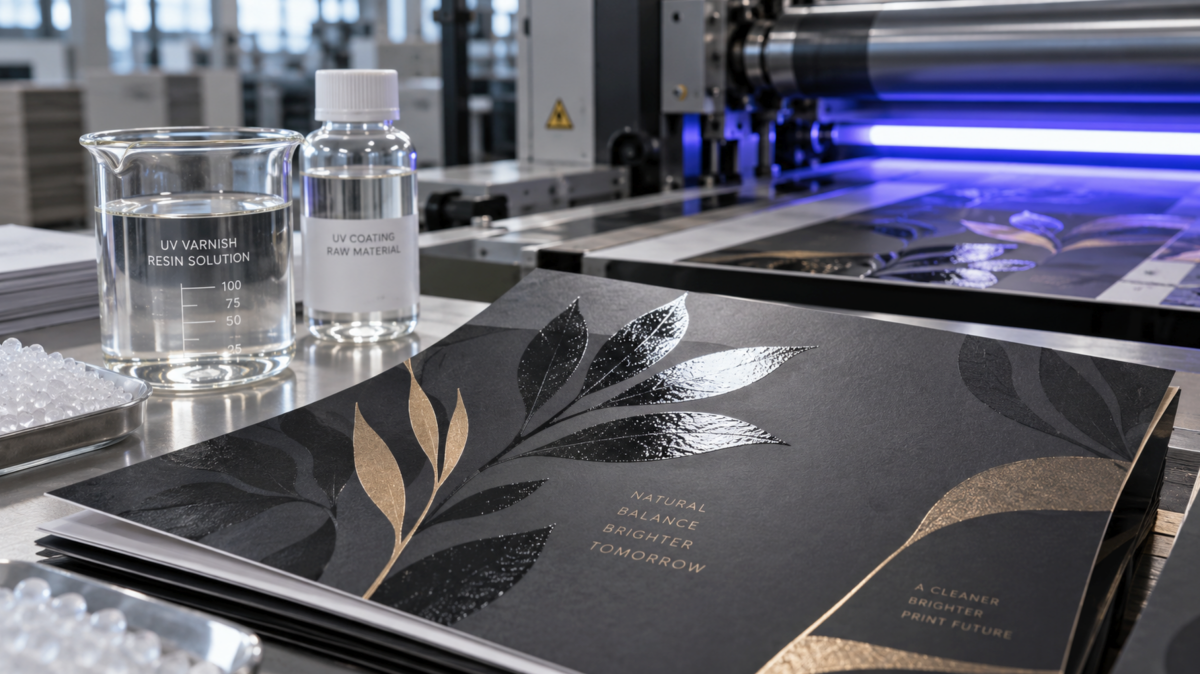
UV (ultraviolet) varnish is a liquid coating used to ‘mask off’ any area of a design and enhance it (i.e. varnishing text, logos or images whilst leaving the remainder of the page unaffected). Unlike lamination, UV varnishes come in an array of finishes and not only include gloss and matt but also glitter and colour-flip versions, as well as many others.
UV Varnish Pros:
– can be used to enhance specific areas such as text, logos or images rather than cover a whole page
– additional substances can be added to varnish to increase its versatility, such as glitter
– can be used in conjunction with a laminate and printed over the top to create a more creative and diverse result
UV Varnish Cons:
– if printed over a crease in a document, it will crack in the same way ink does
– if printed over text or images, it will be subject to ‘make-ready’ die charges, which increase its cost
– due to the additional setup required, UV varnishing is a longer process than lamination
A neutral varnish (which is invisible to the eye) may also be used to ‘coat’ or ‘seal’ the ink and can be applied ‘online’ (the varnish is applied directly to the product on the press after the ink has been printed) or ‘offline’, which means it is applied some time after the print process. This is not the same as a Spot UV varnish, as a neutral varnish will generally cover the whole document to prevent ink offset.
Many factors will determine whether lamination or varnish is the better choice, such as budget, application, performance requirements and the desired finish. At Haohui, we are happy to provide product recommendations and technical support based on your specific printing needs.
If you are looking for UV varnish resins or related solutions for your printing applications, feel free to explore our products or contact us. We would be glad to discuss your requirements and see how we can support your project.
Post time: Sep-11-2026


